CLIENT:
Groninger Museum (Fictional)
INDUSTRY:
UX/UI Design
ROLE:
UX/UI, Motion, Research
YEAR:
2025

Groninger Museum
the shift.
problem.
Digitally translating the magical and creative experience of the iconic museum architecture and inspiring artworks.
outcome.
An intuitive, mobile-first, and conversion-driven interface that serves as a highly engaging digital attraction.
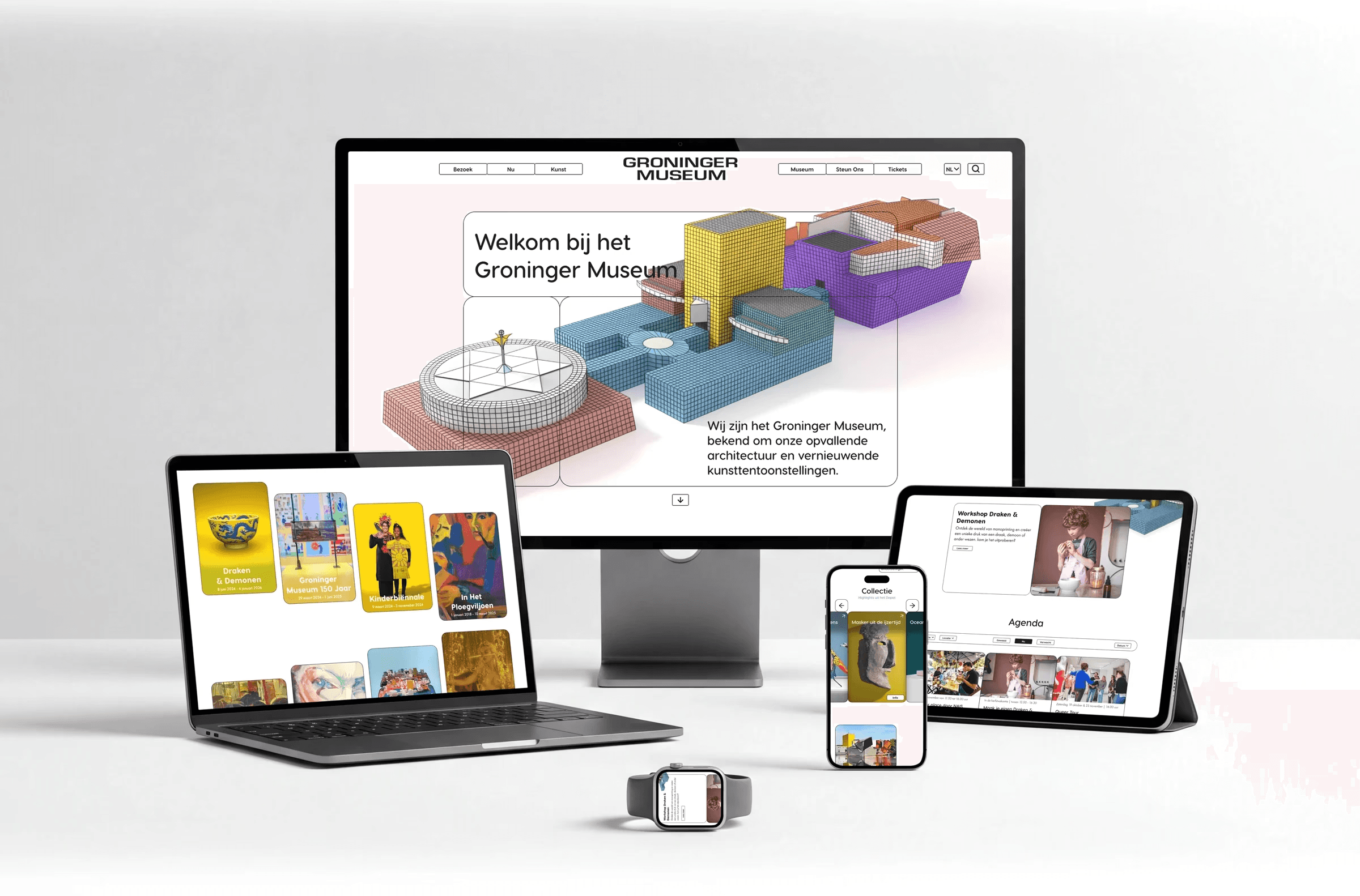
The Groninger Museum’s iconic architecture is a defining city landmark, yet it remains nearly invisible on their current website. To resolve this disconnect, the digital interface needs to mirror the building's real-world impact as a major attraction. By integrating interactive 3D elements, the new design positions the architecture as a digital centerpiece, framed within a modern and abstract visual style that perfectly reflects the museum's contemporary identity.
the solution.
Bringing the Museum to Life
Desktop Experience
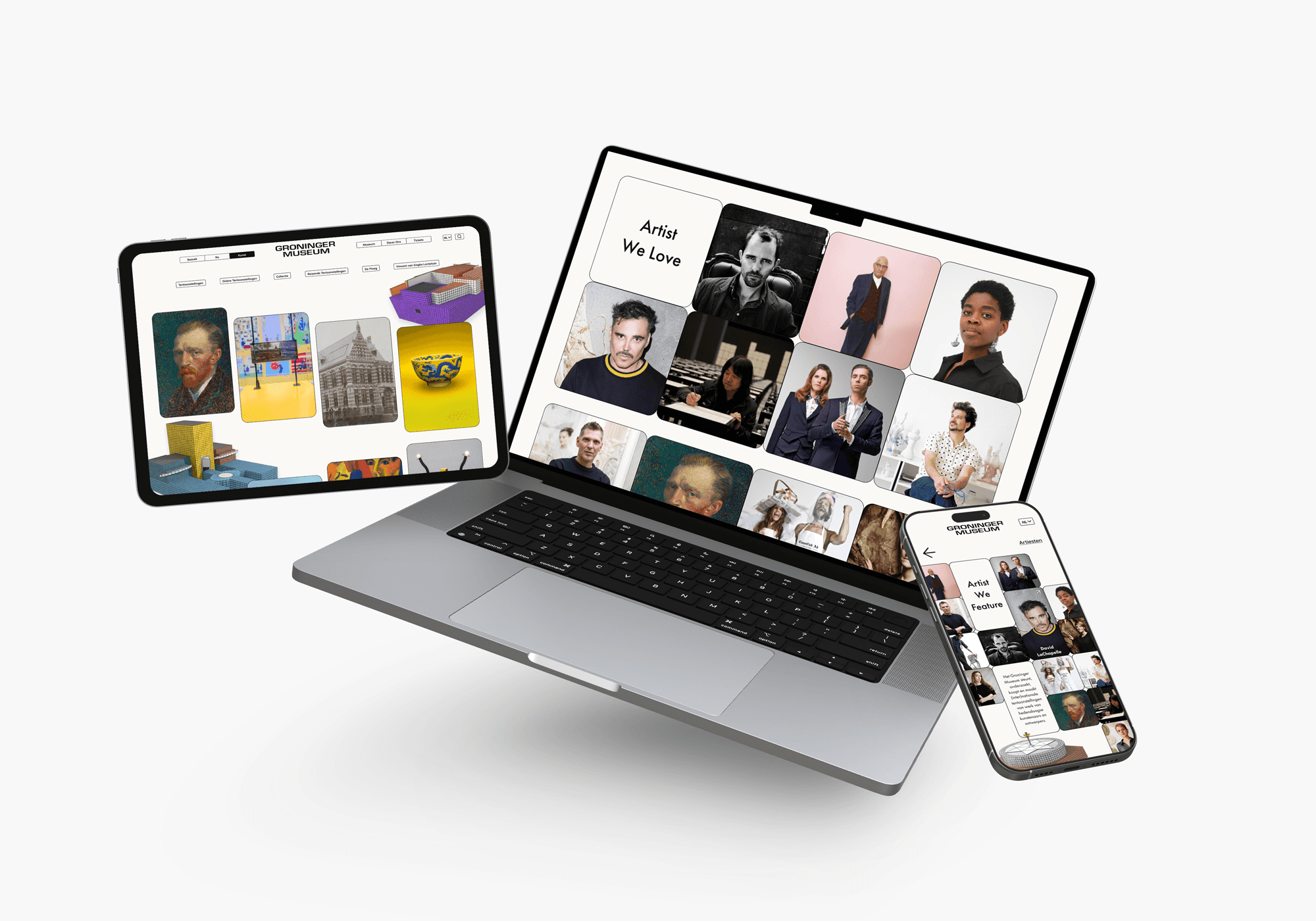
Mobile Experience
A fully responsive digital experience, scaling seamlessly from desktop to mobile. Built with dynamic components and playful interactions to reflect the museum's vibrant identity.
The custom animations perfectly capture the exact energy the Groninger Museum aims to project. A upgrade from the original.

Tjerk Dijkstra
Interactive Designer & Lecturer
research.
From Friction to Flow


To establish a baseline, I conducted scenario-based usability tests on the original website to identify core friction points. These initial insights drove the first design iteration. To prevent participant bias, I validated the redesign using the exact same scenarios with a fresh group of users. This iterative feedback loop allowed me to continuously refine and perfect the experience.
View the full reports: [Tourist Usability Test - Current] & [Tourist Usability Test - Redesign]
Evaluating Brand & Usability

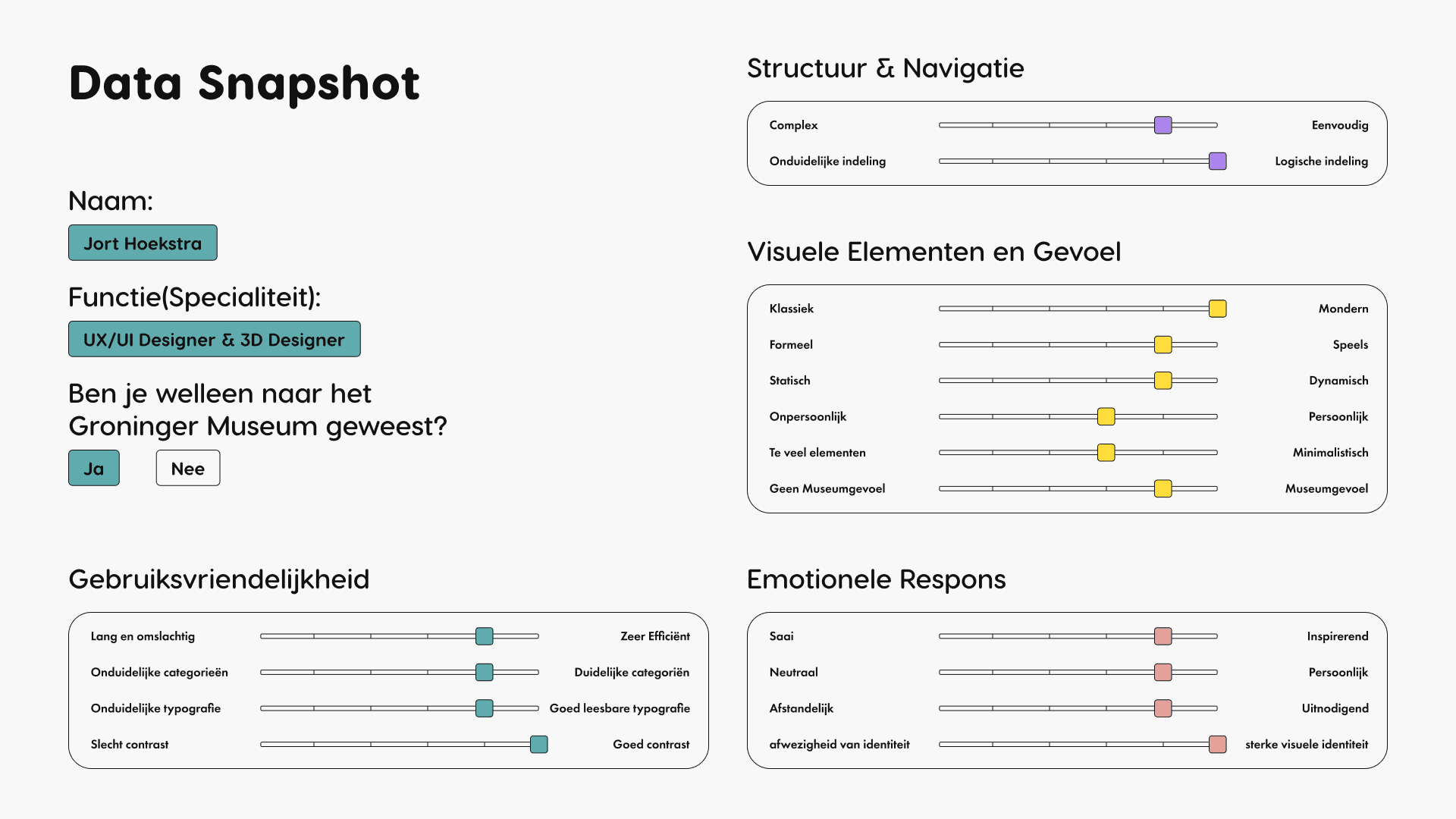
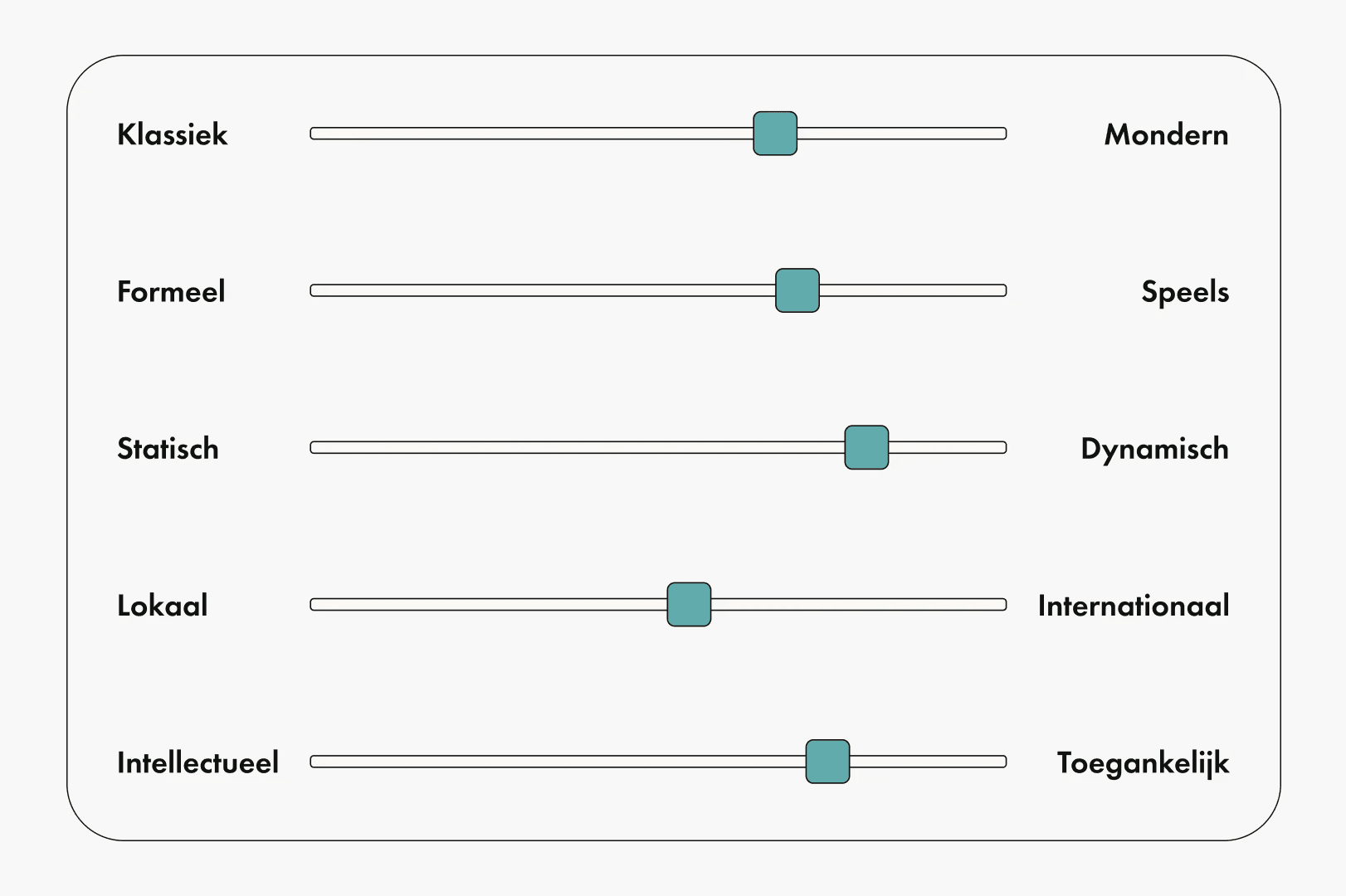
To evaluate both functionality and brand perception, I conducted a combined Usability and Emotional Response test. This provided clear insights into how well the interface aligned with the museum's identity, while exposing specific areas of user friction. I leveraged this data to iteratively optimize the design and update the Brandbook’s personality guidelines.
View the full report: [Usability & Emotion Test]
design.
From Physical Landmark to Digital Interface
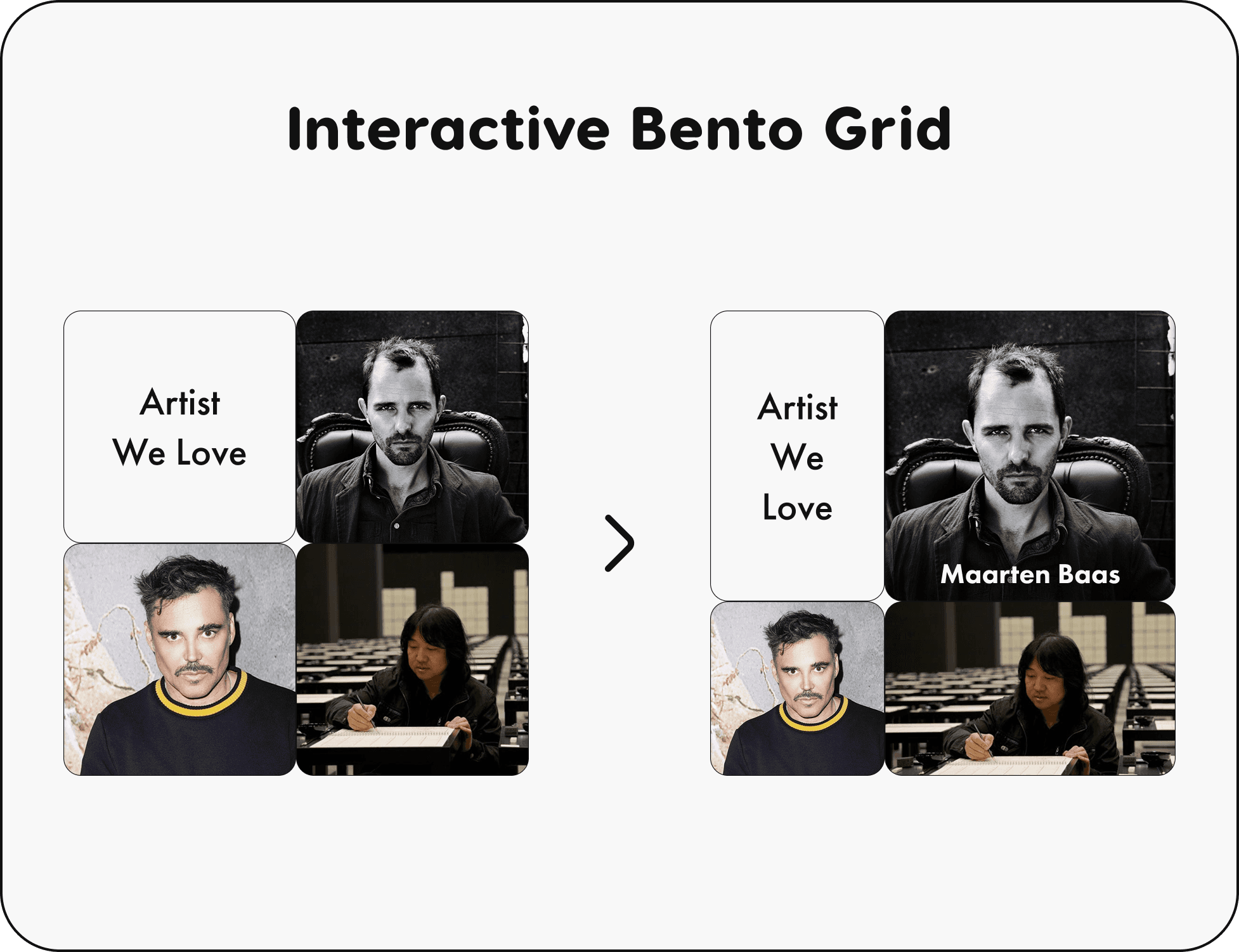


To bridge the gap between the physical and digital, I treated the website as a direct extension of the museum's iconic, postmodern architecture. By translating its playful, abstract forms into a spatial UI system, the layout becomes an experience in itself. Utilizing dynamic patterns like the Interactive Bento Grid and fluid motion design, static artworks are brought to life, transforming a standard grid into an engaging, living digital exhibition.
View the full visual identity [Brandbook]
The color palette is remarkably clever. By grounding the scheme in the building's iconic architecture—the museum's main attraction—it establishes a truly timeless visual identity.

Thomas Geurink
Designer & Lecturer
The Psychology of Interaction


Every design decision is rooted in established UX heuristics and mobile-first principles. By leveraging cognitive psychology and interaction laws, I built a solid framework that clearly articulated the value of an intuitive experience to stakeholders. Furthermore, purposeful micro-interactions were integrated to subtly guide user attention, reducing cognitive load and creating a seamless, engaging flow.
Dive deeper into the methodology: [Design Rationale]
Systematic UI Foundations


A robust digital product relies on a rigorous foundation. I established a strict baseline grid and custom iconography as the fundamental pillars of the broader Design System. By defining precise rules for stroke terminals and optical sizing, these scalable components guarantee a crisp and cohesive identity across any device.
Explore the foundational guidelines: [Design System]
validation.
Measuring Brand Resonance


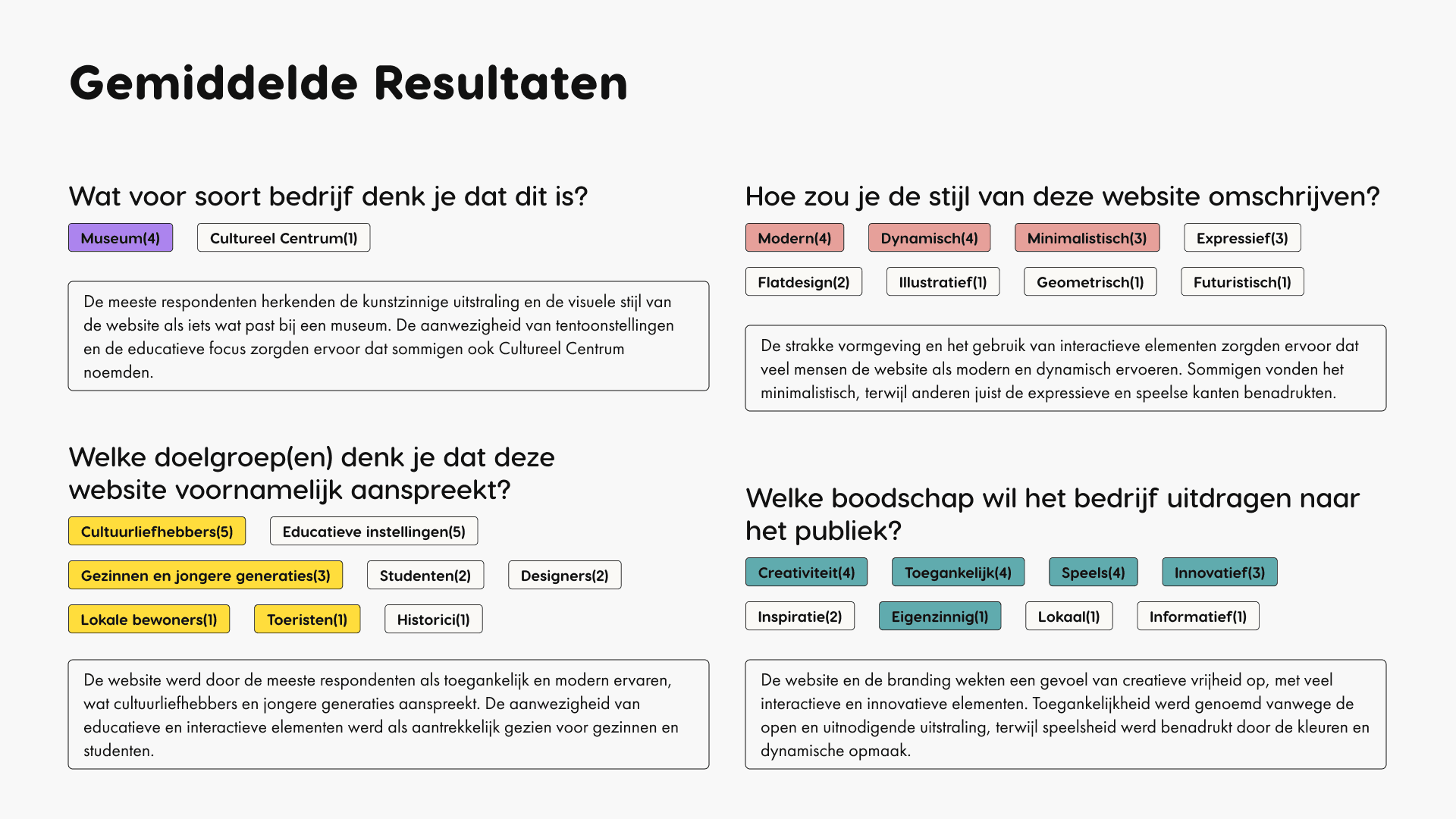
To measure brand resonance, I conducted a Brand Association Test evaluating how the new visual language aligns with users' intuitive expectations. The insights revealed how subtle UI decisions and micro-interactions directly shape brand perception and long-term recall.
View the full report: [Brand Association Analysis]