CLIENT:
Waddencampus
INDUSTRY:
UX/UI Design
ROLE:
UX/UI & Research
TEAM:
Team of 5
YEAR:
2025

the shift.
problem.
Ameland's nature reserves face severe pollution from litter and microplastics. Research indicates that visitors lack environmental responsibility, primarily driven by a negative attitude towards the unpleasant, tedious task of picking up trash during their stay.
outcome.
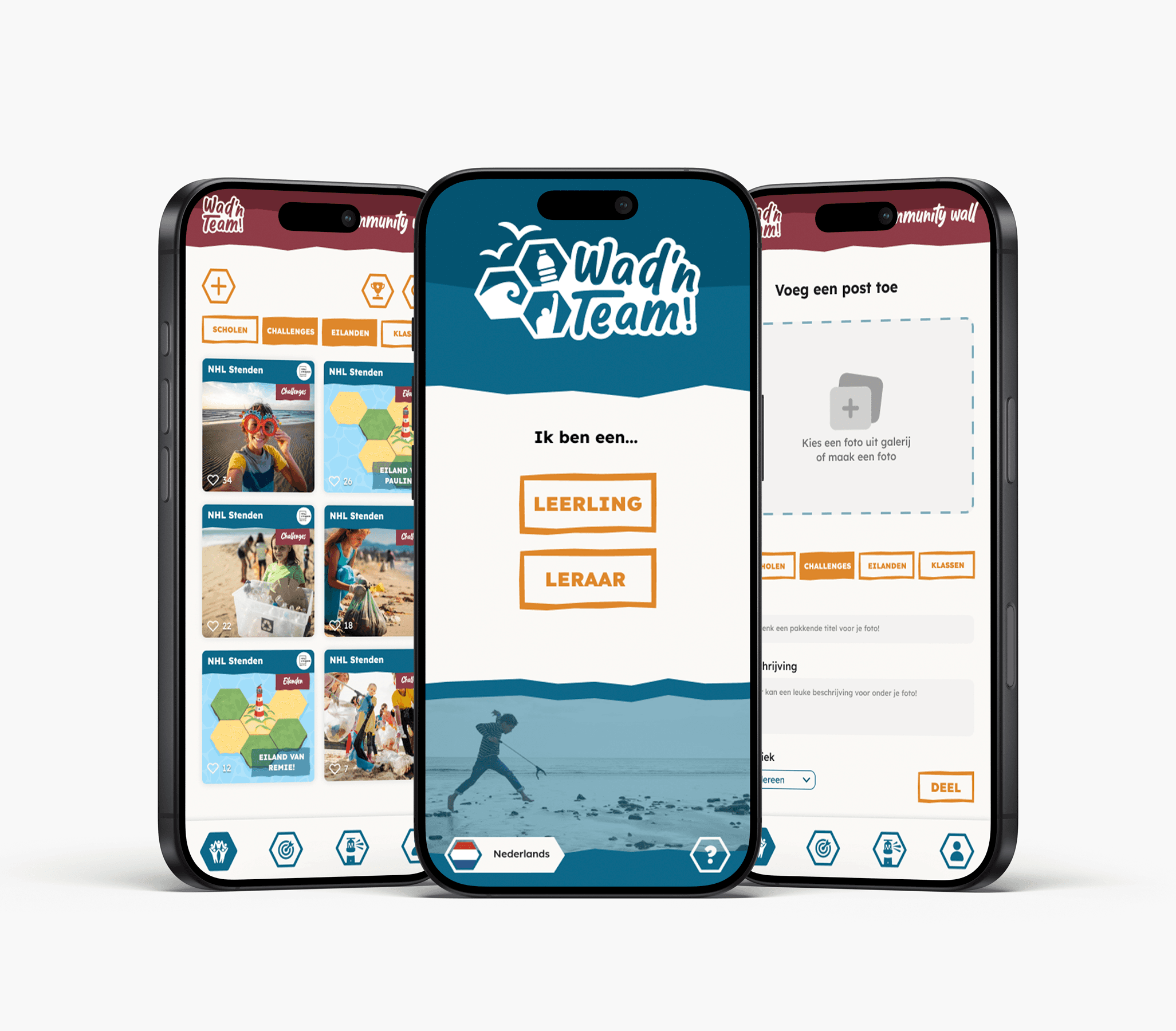
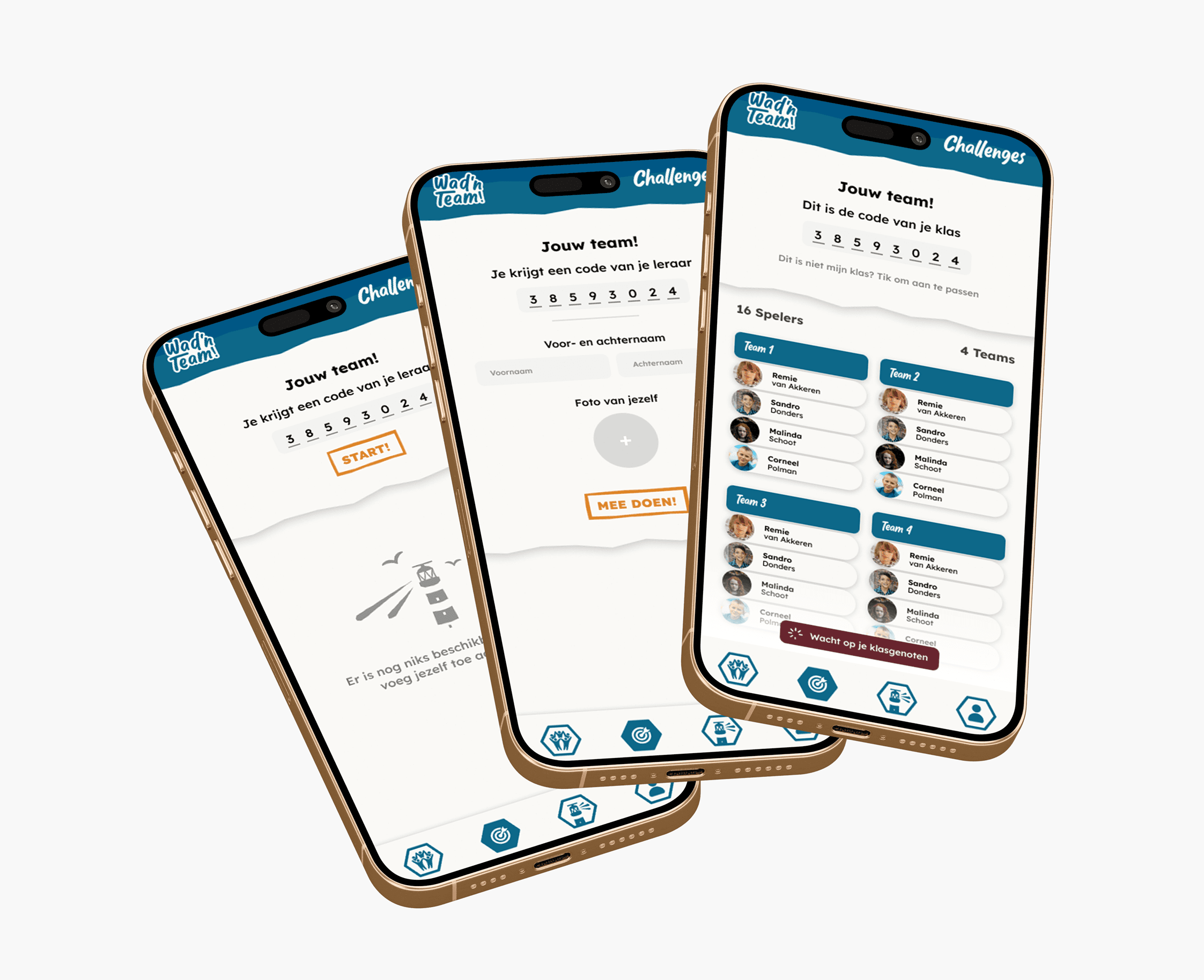
Wad'nTeam! is an educational app that turns waste collection into a competitive team game. By completing local cleanup challenges, students earn currency to build virtual islands, using social influence to drive real behavioral change."
The paradigm shifted from traditional, obligation-based cleanup initiatives to behavior-driven gamification. Instead of lecturing users about pollution, the application leverages psychological motivators to make cleaning up a socially rewarding and highly engaging team effort.
the solution.
Gamifying Environmental Action
Interactive Tour: Motivating Sustainable Habits
Wad'nTeam! is a gamified application that transforms waste collection into a competitive group activity. By completing interactive challenges, users earn rewards to construct virtual islands. Supported by a community wall to foster social influence, the platform leverages behavioral psychology to motivate sustainable habits and environmental responsibility.
It makes it fun, and you learn something at the same time. You are being taught something while actually enjoying it.

Primary School Student
research.
Uncovering Root Causes: The Why Ladder

To understand the deeper psychological reasons behind Ameland's waste problem, a 'Why-Laddering' method was utilized. By systematically asking 'why', the overarching issue was deconstructed into two core problems: deliberate littering and waste washing ashore. Uncovering these underlying root causes provided the essential insights needed to establish targeted, strategic design frames.
Defining the Scope

To prevent tunnel vision and tackle a vast environmental crisis effectively, a framing methodology was applied. By splitting the broad pollution problem into four highly specific scenarios, it became possible to identify which issues were actually realistic to solve. This structured breakdown directly informed the strategic decision to focus exclusively on modifying visitor habits.
The Theory of Planned Behaviour

Card sorting results were analyzed using the Theory of Planned Behaviour to map out specific user attitudes, social norms, and behavioral controls. This psychological framework identified that a negative attitude toward picking up waste was the primary barrier. Consequently, the strategic focus shifted entirely to improving this attitude to motivate sustainable habits.
Stepping into the User's World


Extensive survey data was distilled into detailed personas to accurately represent the core demographic. Mapping the specific frustrations and motivations of students like Sanne and Joep provided a clear blueprint for the design. Their need for instant gratification, social validation, and interactive tasks formed the fundamental basis of the application's reward system.
design.
Validating the Solution


To ensure a viable and impactful solution, three initial concepts were rigorously evaluated using the 4W1H framework and SWOT analysis. By systematically weighing the strengths and weaknesses of each direction, the most promising mechanics were identified. These isolated strengths were then synthesized into one comprehensive platform, combining cleanup challenges, a virtual reward economy, and a social community wall to maximize user engagement.
Defining the Value Proposition


The NABC framework was employed to meticulously validate the concept's overall value proposition. This analysis highlighted a significant market gap, as traditional cleanup efforts severely lack sustained motivation. By contrasting these findings with the proposed gamified approach, the framework proved that integrating competitive mechanics ensures long-term, scalable user engagement.
It is good for nature. Fewer animals get tangled up in the plastic, and the world just becomes a more beautiful place.
Primary School Student
Facilitating Collaborative Ideation

To ensure equal participation across the multidisciplinary team, I facilitated a structured 'Round Robin' sketching session. This approach prevented single perspectives from dominating the creative direction, effectively democratizing the early ideation phase. By guiding the team to continuously pass and refine each other's ideas, diverse concepts were successfully synthesized into a cohesive set of low-fidelity wireframes.
Iterative Usability Testing

To evaluate the application's core functionality, the UX team developed a low-fidelity Figma prototype for rigorous usability testing. By employing the 'Thinking Aloud' method, critical insights regarding navigation flow and icon clarity were gathered directly from users. This feedback was subsequently structured using the MoSCoW method, ensuring essential usability bottlenecks were resolved before moving into high-fidelity design
Gamified Interface Breakdown
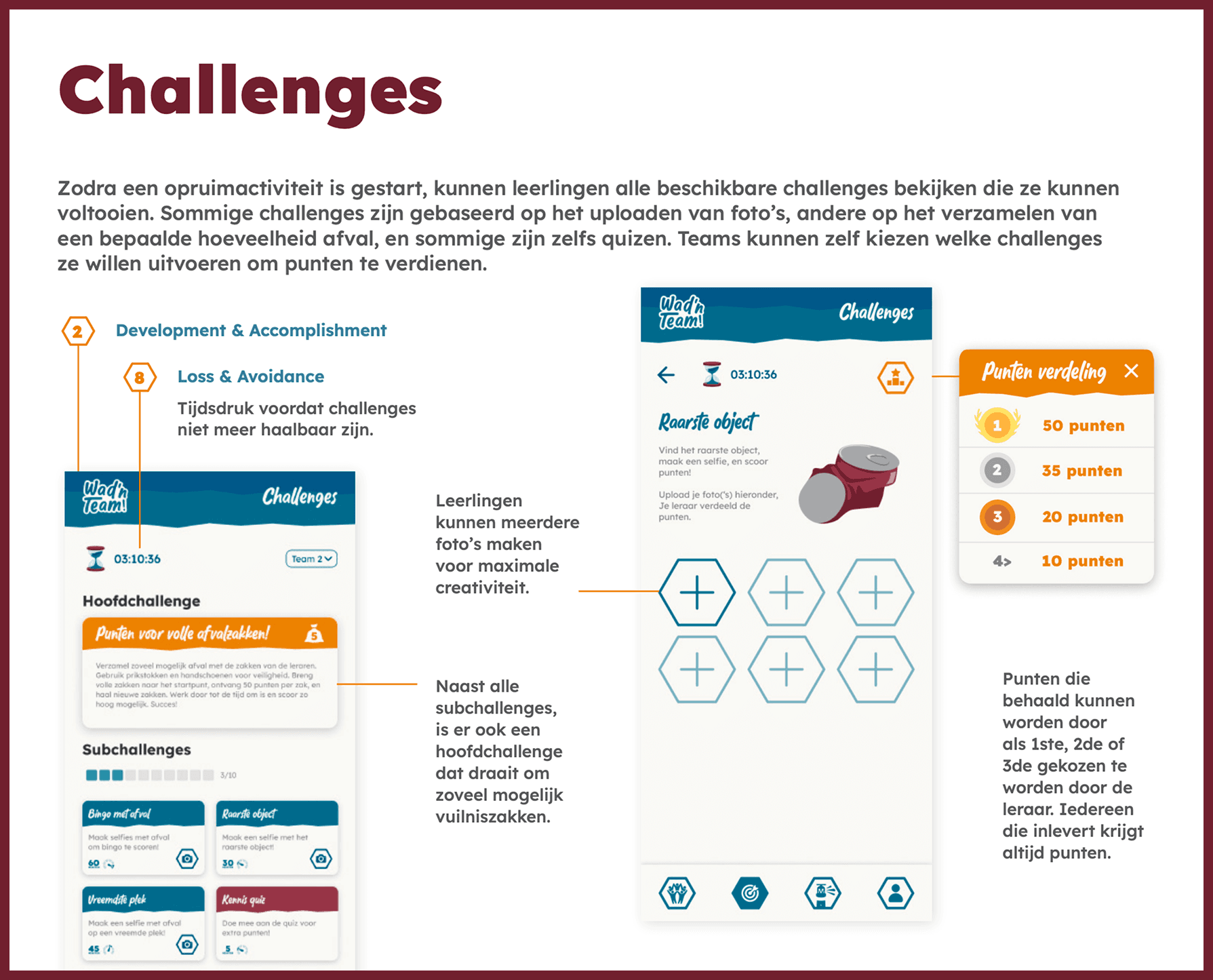
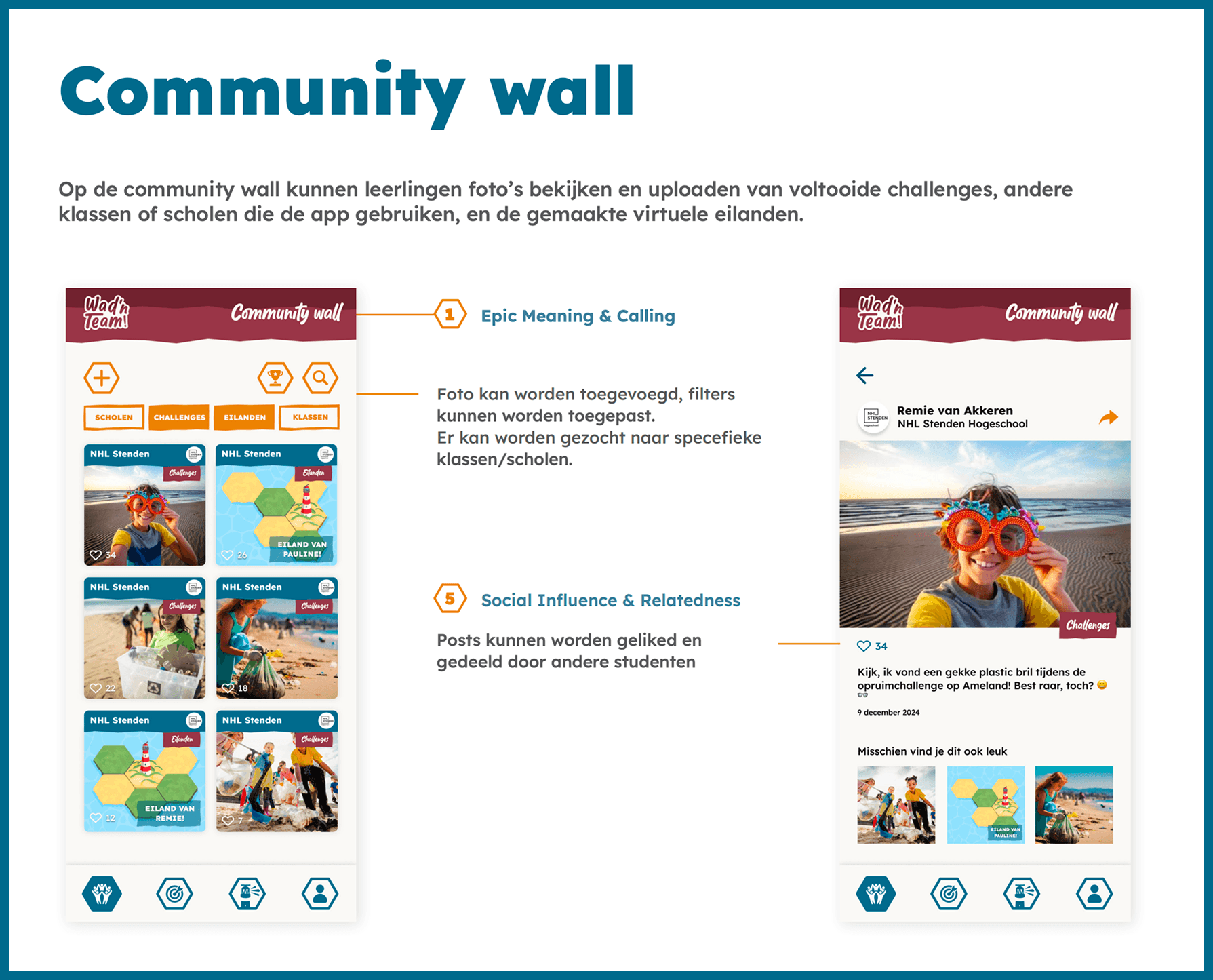
The final interface transforms environmental cleanup into an engaging, collaborative experience. By pairing time-sensitive cleanup challenges with interactive island upgrades and a shared community wall, the platform turns a tedious chore into an intrinsically motivating team effort.
For a comprehensive breakdown of all features, game mechanics, and strategic decisions, explore the full Concept Deck.
It is a fun activity for a school trip, but I wouldn't do it in my free time. I have better things to do.
Primary School Student