PROJECT TYPE:
Self-Initiated
INDUSTRY:
UX/UI Design
ROLE:
UX/UI, Motion, Research
TEAM:
Duo project with Melvin Dotinga
YEAR:
2026

the shift.
problem.
Young adults face rising mental pressure, yet traditional healthcare often feels clinical and inaccessible. Because merely talking isn't enough, there is a critical lack of low-barrier tools that help users independently decode internal chaos into manageable patterns.
outcome.
Onvertaalbaar is a self-initiated app bridging this gap. By translating abstract thoughts into visual entities, it creates healthy psychological distance. This empowers users to explore their inner world, turning overwhelming emotions into actionable quests.
We shifted the focus from reactive symptom-fighting to proactive self-regulation. Instead of waiting for a crisis to seek help, this approach gives young adults the agency to build long-term psychological flexibility on their own terms.
the solution.
Visualizing the invisible
Project Pitch: The 'Why' behind Onvertaalbaar
App Walkthrough: From emotion to action
Onvertaalbaar is a digital tool that replaces clinical symptom-fighting with proactive self-reflection. By giving abstract thoughts a tangible visual form called 'spirits', the app creates healthy psychological distance. Users can safely explore their inner world, track their mental patterns, and turn overwhelming emotions into personalized, manageable quests.
research.
Framing the Human Experience

Initial research led to a pivotal shift in our strategy: designing for clinical diagnoses puts users in restrictive boxes and limits their growth. Guided by expert insights, we discarded medical labels to focus entirely on the human experience. Instead, we defined five universal behavioral barriers as our core 'frames' to serve as the strategic foundation for our in-depth user interviews.
From Raw Data to Actionable Insights
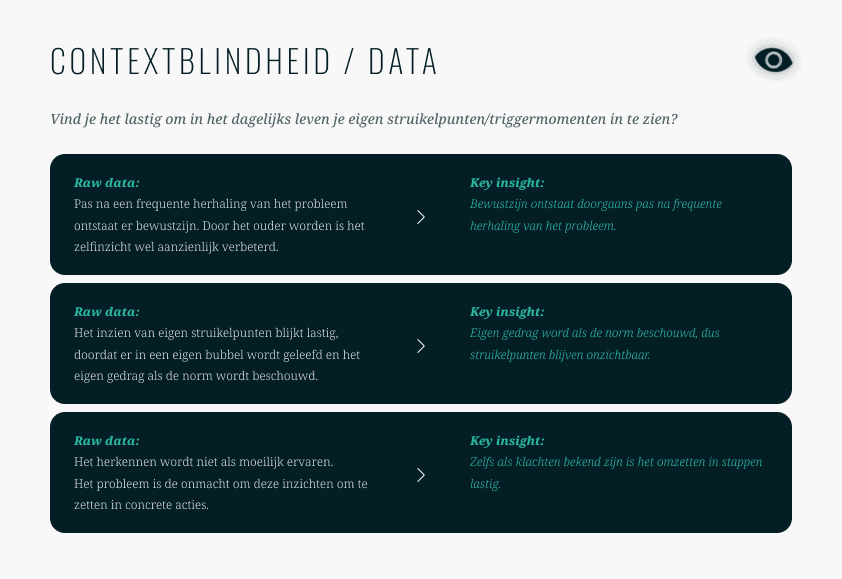


We translated our 5 core frames into open-ended questions for in-depth user interviews. By rigorously analyzing the raw data, we extracted key insights and distilled them into specific 'micro-frames'. These tangible psychological principles directly shaped the features of our concept.
Narrowing the Focus: Expert Validation

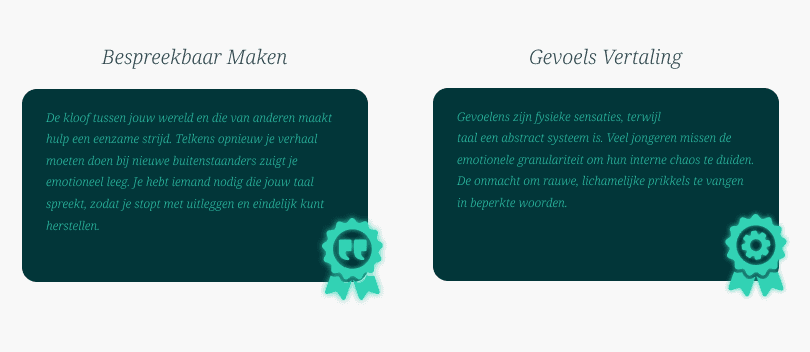
To validate our initial findings, we presented our raw data to Health Innovation expert Lars Veldmeijer. He strongly advised us to step outside the formal, clinical healthcare environment to avoid restrictive ethical complications and diagnostic labels. Together, we synthesized our overlapping concepts into two definitive core frames: 'Translating Emotions' and 'Making it Discussable'. This pivot formed the strategic foundation for our entire product.
Psychological Flexibility

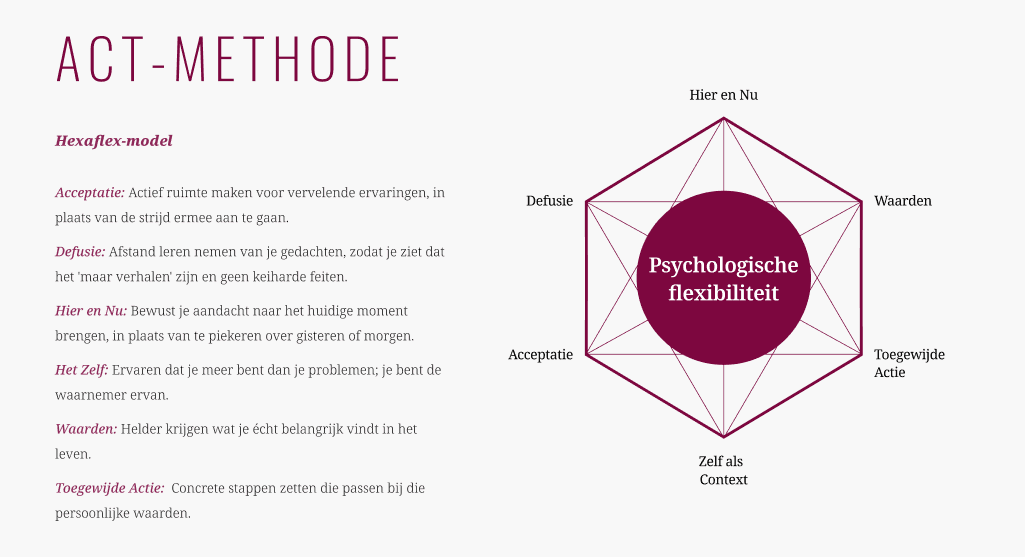
To bridge the gap between creative therapy and a digital flow, we consulted art therapist Anna Haunschild. She highlighted that creating a tangible visualization prevents users from hiding behind inadequate words. This crucial insight led us to our core psychological framework: Acceptance and Commitment Therapy (ACT). Instead of trying to eliminate negative thoughts, ACT focuses on building 'psychological flexibility' as the fundamental engine of our user experience.
design.
Co-Creation: Testing the Mechanics


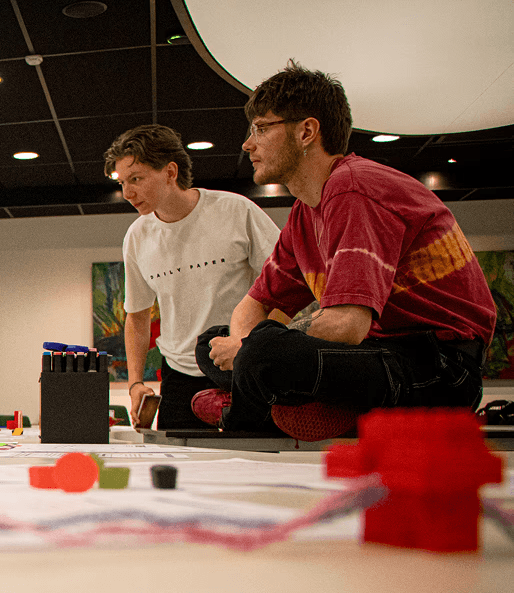
To test the practical application of our psychological frameworks, we facilitated an interactive co-design session. We provided participants with modular 'building blocks' based on the ACT methodology, allowing them to construct their own emotion-translation journey. By observing how users navigated these physical route planners and quantified their cognitive effort, we gained critical, actionable data on which mechanisms truly foster psychological flexibility.

Mapping Effort vs. Insight


To evaluate the effectiveness of our co-design session, we mapped every user-selected module on a quantitative matrix, measuring 'Cognitive Effort' against 'Insight Value'. This visual plotting instantly revealed which exercises provided meaningful reflection and which caused unnecessary friction. It allowed us to confidently discard overly complex modules and prioritize the features that truly resonated with our target audience.
The target audience is deeply embedded in Jesse's process. He doesn't just design from his own experience; he truly steps outside himself to understand the user's needs.

Thomas Geurink
Designer & Lecturer
Beneath the Surface: Qualitative Synthesis

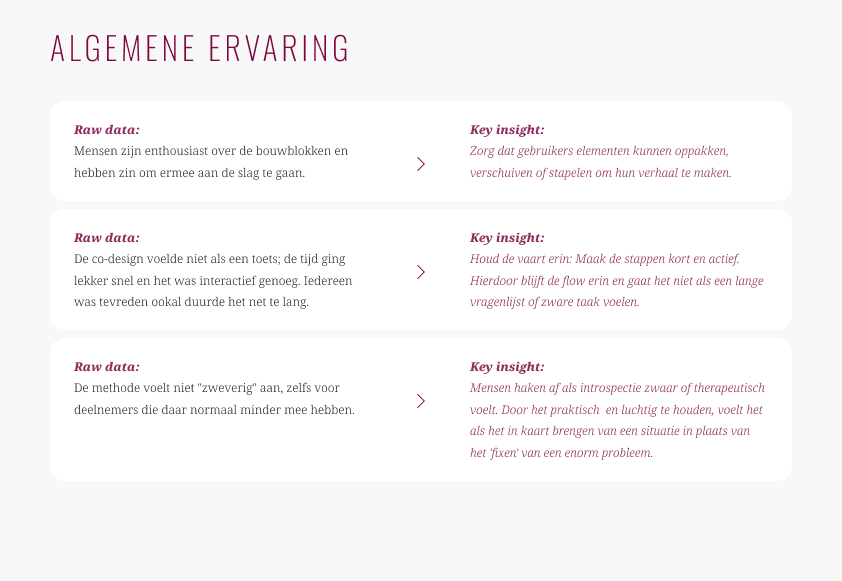


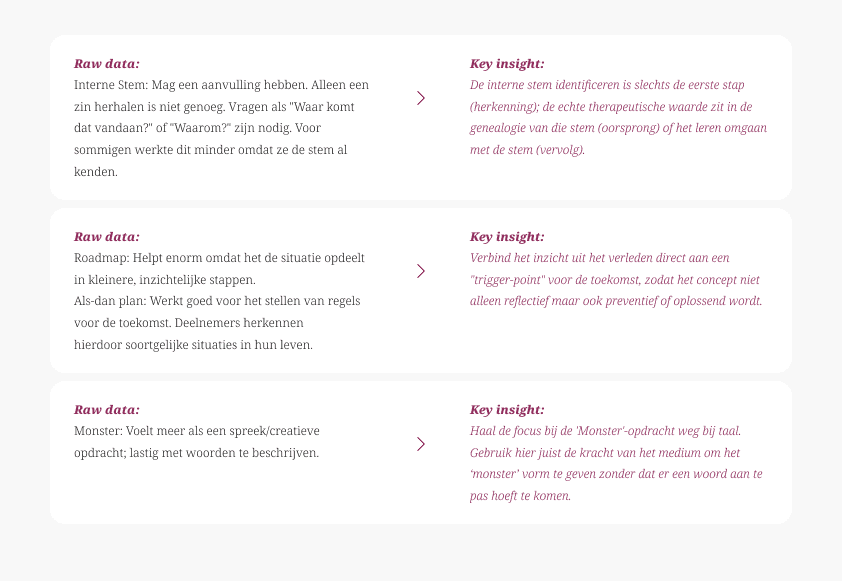
In a highly emotional context, quantitative data only scratches the surface. To truly understand our target audience, we applied the iceberg methodology. Instead of just listening to what users said, we observed their underlying behaviors, asking ourselves: 'What is the real driver here?' By systematically coding these raw observations, we uncovered hidden values and motives, translating them directly into actionable design features.
Defining the Core Principles

While the co-design sessions yielded a massive amount of qualitative data, we synthesized our findings into four pivotal design decisions. By strictly adhering to these core principles, we ensured the final application would genuinely facilitate psychological flexibility.
Jesse is a thorough, structured, and slightly perfectionistic designer. He isn't afraid to critically evaluate every design direction, constantly striving for a solution that actually makes a real impact. His focus throughout the process is clear and genuinely human-centered.

Tjerk Dijkstra
Interactive Designer & Lecturer
Designing an Inner Playground, Not a Chore


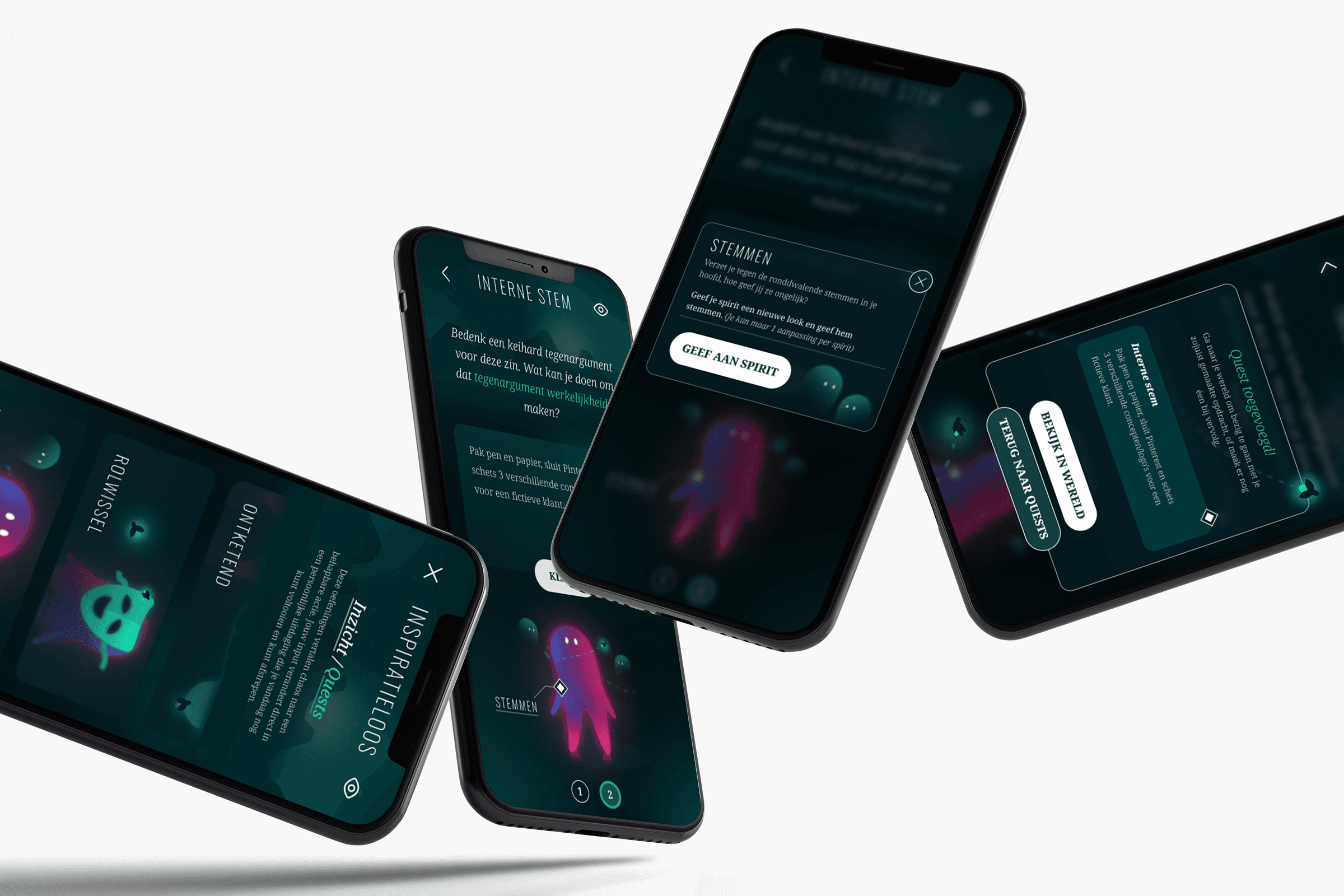
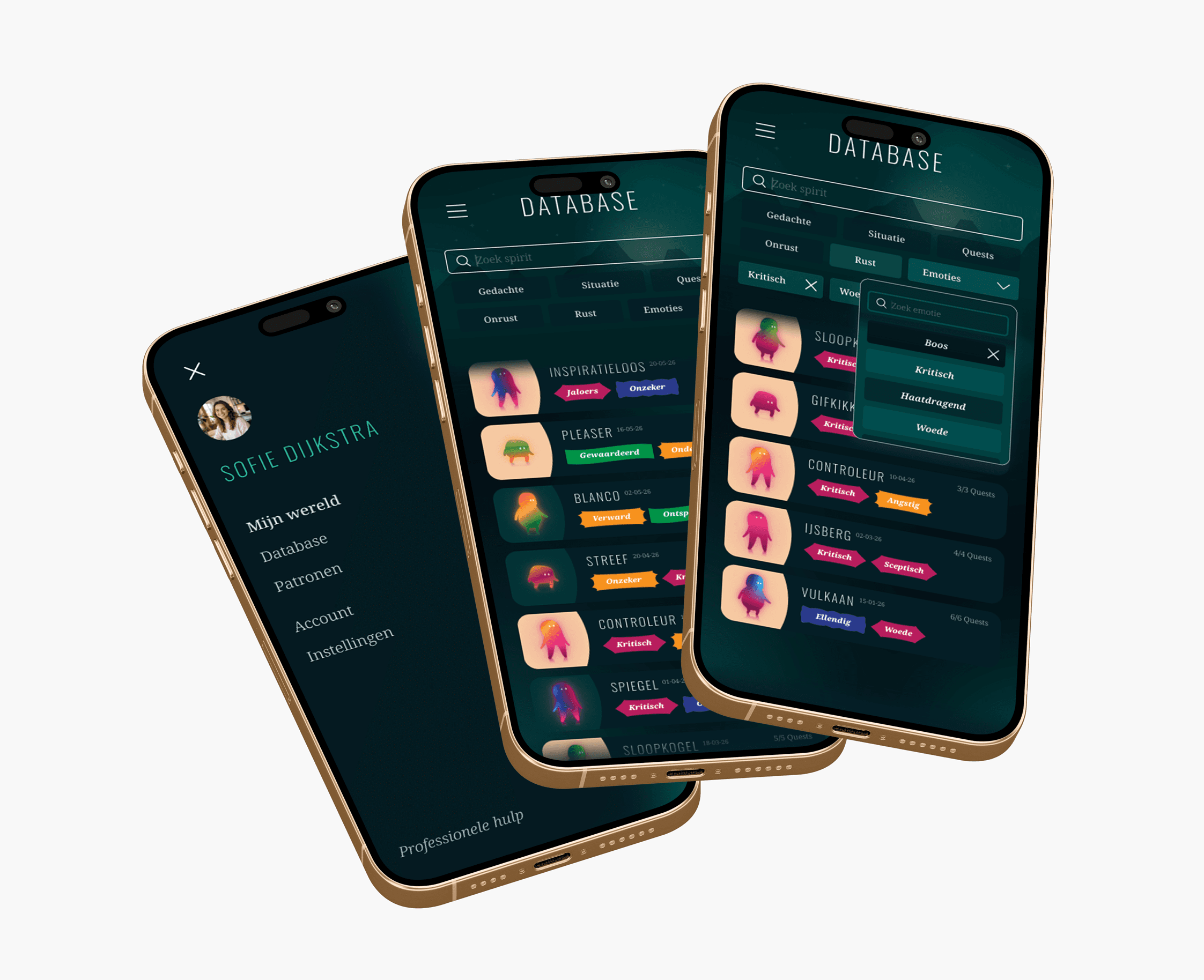
Traditional mental health tools often fail because they feel like clinical homework, creating unnecessary friction and guilt. Grounded in Kolb’s experiential learning cycle, we reimagined self-reflection as an interactive sandbox. As demonstrated in the UI examples above, abstract thoughts are materialized into visual 'spirits' that instantly adapt to user input. Instead of dictating actions, Onvertaalbaar grants complete autonomy, turning heavy emotional processing into engaging, low-barrier quests.
Curious about the full scope of our research data and detailed design rationale? Dive into the comprehensive [Onvertaalbaar UX & Research Dossier]